
2 to 1 Nap Transition: Signs Your Toddler Is Ready

If your toddler suddenly starts fighting naps, taking forever to fall asleep at bedtime, or waking early in the morning, you may be entering the challenging but completely normal 2 to 1 nap transition phase. For many parents, this stage can feel confusing because one day two naps seem necessary, and the next day they completely derail the schedule.
The good news? This nap transition is a developmental milestone, not a sign that you’re doing something wrong. With the right timing and schedule adjustments, most toddlers settle into one nap beautifully and often sleep better overall.
In this guide, we’ll cover:
Understanding the 2 to 1 Nap Transition
The 2 to 1 nap transition happens when a toddler moves from taking two daytime naps to one longer midday nap. Most children make this transition between 13 and 18 months, although some are ready slightly earlier or later depending on temperament, sleep needs, and developmental changes.
This transition can feel especially tricky because toddlers often go back and forth for several weeks. Some days they genuinely need two naps, while other days one nap works perfectly. That inconsistency is completely normal.
Parents are often surprised to learn that sleep needs don’t suddenly decrease overnight. Instead, your toddler’s wake windows gradually lengthen, making it harder for them to fit two restorative naps into the day without affecting bedtime.
Signs Your Toddler Is Ready for One Nap
Every child is different, but there are several consistent signs that usually indicate readiness for the 2 to 1 nap transition.
Nap Refusal
One of the clearest signs is consistently resisting one of the naps. Maybe your toddler happily takes the morning nap but completely refuses the afternoon nap. Or perhaps the first nap becomes very short while the second shifts later and later. Occasional nap refusal is normal during developmental leaps or teething. However, if it happens consistently for 1–2 weeks, it may signal readiness for a schedule change.
Bedtime Becomes a Battle
A toddler who suddenly takes an hour to fall asleep at night may no longer be tired enough for bedtime because daytime sleep is interfering with nighttime sleep pressure. Parents often assume bedtime struggles mean overtiredness, but in this age group, undertiredness can actually become more common during the nap transition phase.
Early Morning Wakings
If your toddler starts waking at 5:00 or 5:30 a.m. despite previously sleeping well, too much daytime sleep or poorly timed naps could be disrupting their sleep rhythm. This is especially common when the second nap starts pushing too close to bedtime.
Longer Wake Windows
You may notice your toddler comfortably staying awake for 4–5 hours without becoming fussy. Longer wake windows are one of the biggest developmental clues that they’re moving toward one nap.
The Best Age for the 2 to 1 Nap Transition
Most toddlers transition between 13–18 months, with 15 months being the average sweet spot. However, age alone should never determine readiness. Some younger toddlers appear ready because they temporarily resist naps due to teething, separation anxiety, or developmental leaps. Transitioning too early can lead to chronic overtiredness.
A toddler who truly needs one nap typically shows multiple readiness signs consistently, not just for a few difficult days.
Common Mistakes During the Transition
The 2 to 1 nap transition is one of the easiest sleep transitions to rush. Unfortunately, moving too quickly can create weeks of overtiredness, bedtime struggles, and night wakings.
Transitioning Too Early
This is by far the most common mistake. Many parents interpret occasional nap refusal as a sign to drop a nap entirely. But toddlers under 13 months often still physiologically need two naps, even if schedules become messy temporarily. If your toddler becomes extremely fussy, starts waking overnight, or crashes early in the evening after dropping to one nap, they may not be fully ready yet.
Expecting Immediate Consistency
Transitions are messy. Your toddler may alternate between one nap and two naps for several weeks before settling into a predictable rhythm. This is especially true during illness, travel, growth spurts, or developmental milestones. Flexibility during this phase is important.
Pushing Wake Windows Too Far
Parents sometimes try to force one nap too quickly by stretching wake windows dramatically. While some stretching is necessary, overtired toddlers often have shorter naps, more night wakings, and increased irritability. The goal is gradual adjustment, not sudden exhaustion.
How to Transition from 2 Naps to 1
Most toddlers do best with a gradual approach.
Option 1: Gradually Push the Morning Nap Later
This is usually the gentlest method. Instead of offering the first nap at 9:30 or 10:00 a.m., slowly move it later every few days:
10:00 a.m.
10:30 a.m.
11:00 a.m.
Eventually 11:30–12:00
As the morning nap shifts later and lengthens, the second nap naturally disappears. This gradual adjustment helps prevent overtiredness while allowing the body clock to adapt slowly.
Option 2: Alternate One-Nap and Two-Nap Days
Some toddlers do well alternating schedules depending on how tired they seem.
For example:
Home days → one nap
Busy mornings or early wake-ups → two naps
This flexible approach can reduce overtiredness during the adjustment period.
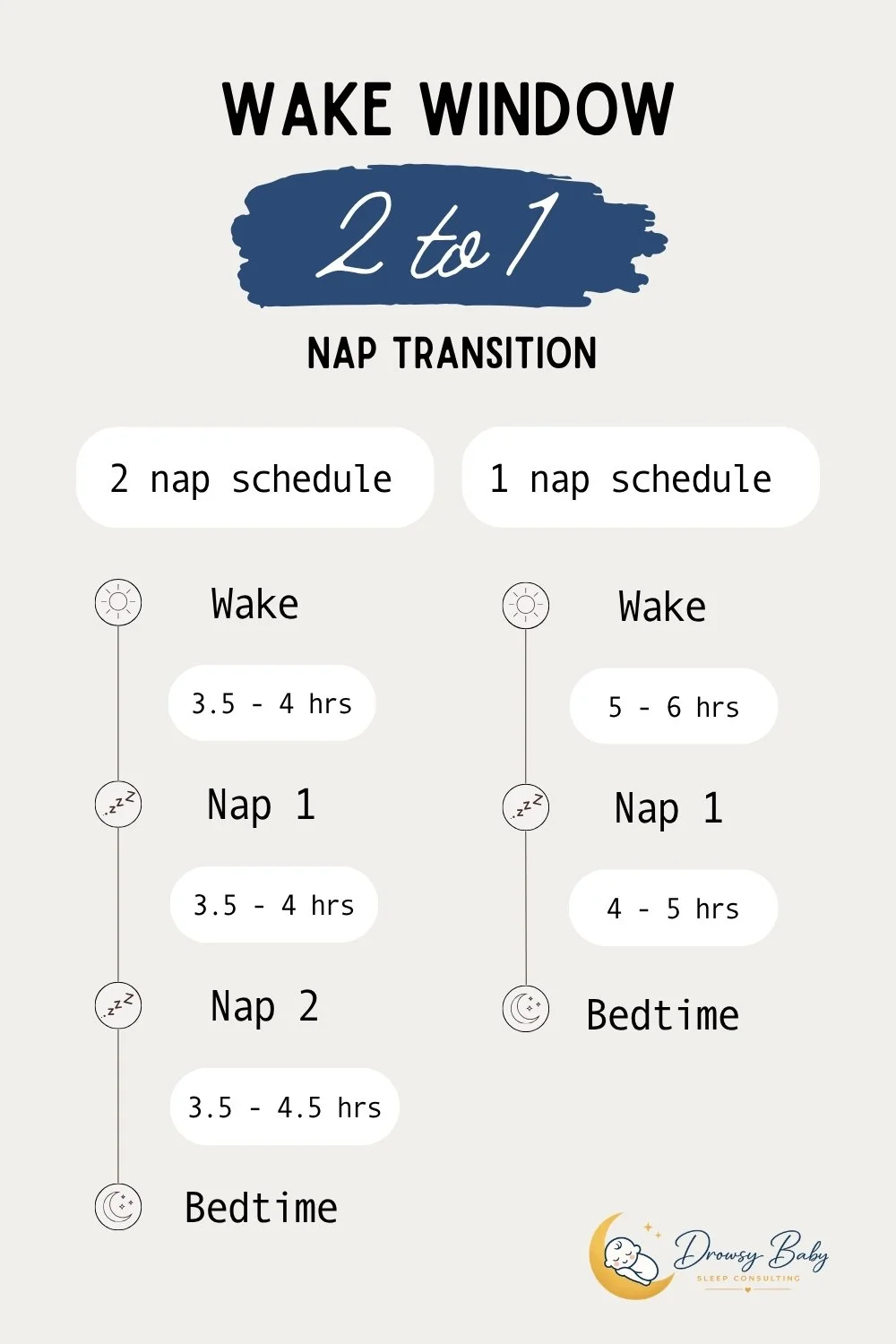
Sample 1-Nap Schedule
Once fully transitioned, many toddlers thrive on a schedule similar to this:
Example Schedule
Wake: 6:30–7:00 a.m.
Nap: 12:00–2:00 p.m.
Bedtime: 7:00–7:30 p.m.
The midday nap usually becomes longer and more restorative than either of the previous two naps combined.
What If My Toddler Takes a Short Nap?
Short naps are extremely common during the transition.
If your toddler only naps for 45–60 minutes:
Offer an earlier bedtime
Keep stimulation low in the afternoon
Avoid adding random cat naps too late in the day
Many parents fear early bedtimes, but temporarily moving bedtime earlier often helps prevent overtiredness and protects nighttime sleep.
How Long Does the Transition Take?
Nap transition can take anywhere from 2–8 weeks depending on the child. Some toddlers transition smoothly within days, while others bounce between schedules for over a month. Progress usually isn’t linear. You may have several good days followed by difficult ones. That doesn’t mean the transition is failing.
Consistency, patience, and watching your child’s sleep cues matter far more than forcing a rigid schedule.
When to Seek Extra Sleep Support
If your toddler is:
Waking multiple times overnight
Extremely overtired every evening
Refusing naps entirely
Experiencing chronic early wakings
Struggling for several weeks without improvement
…it may help to work with a pediatric sleep consultant who can evaluate schedules, sleep pressure, and age-appropriate wake windows.
Sometimes small schedule adjustments make a huge difference.
This Stage Won’t Last Forever
Transition from 2 to 1 nap can feel like an emotional rollercoaster because your toddler’s sleep needs are changing rapidly. One day everything works beautifully, and the next day naps fall apart completely.
That unpredictability is normal.
The key is remembering that this transition is gradual. Most toddlers need flexibility, patience, and temporary schedule adjustments before settling into a stable one-nap routine.
Try not to panic over a few rough days. Sleep transitions are developmental, and with the right support, your toddler will eventually find a rhythm that works well for both naps and nighttime sleep.
If you stay consistent and responsive to your child’s cues, this stage usually becomes much easier than it first appears.
FAQ
-
Most toddlers transition between 13 and 18 months, with many settling into one nap around 15 months.
-
Common signs include nap refusal, bedtime resistance, early morning wakings, and comfortably staying awake for longer periods.
-
Yes. Overtiredness during the transition can temporarily increase night wakings and early rising.
-
Yes. Earlier bedtimes often help prevent overtiredness while your toddler adjusts to longer wake windows.
-
Absolutely. Many toddlers alternate between one and two naps for several weeks before fully adjusting.
Disclaimer
The information provided in this article is for general informational purposes only and does not constitute medical advice, diagnosis, or treatment. Always seek the advice of your physician or other qualified health provider regarding any medical condition. Drowsy Baby Sleep Consulting, LLC is not responsible for any consequences arising from the use of this content.