
Wake Windows by Age: Baby Sleep Guide for Better Naps and Nights

If your baby fights naps, wakes up after 30 minutes, or suddenly seems impossible to settle at bedtime, there’s a good chance wake windows are part of the puzzle. Understanding wake windows by age can completely change how your baby sleeps. Many parents assume sleep problems mean their baby “isn’t tired enough,” when in reality, overtiredness is often the hidden culprit behind short naps, bedtime battles, and frequent night wakings.
The tricky part? Wake windows change rapidly during the first two years of life. What worked a few weeks ago may suddenly stop working, leaving exhausted parents wondering what happened.
The good news is that wake windows don’t have to feel confusing. Once you understand how they work and how to adjust them as your child grows, sleep often becomes much smoother for everyone in the house.
In this guide, we’ll cover:
What Are Wake Windows?
A wake window is the amount of time your baby can comfortably stay awake between periods of sleep. This includes the time from when your baby wakes up until they fall asleep again for a nap or bedtime.
For example:
If your 4 months old wakes at 7:00 AM and goes down for their first nap at 9:00 AM, their wake window is 2 hours.
Wake windows are important because babies can only tolerate being awake for certain lengths of time before their bodies become overstimulated and overtired. When babies stay awake too long, stress hormones like cortisol can rise, making it harder for them to fall asleep and stay asleep. On the other hand, if the wake window is too short, they may not have enough sleep pressure built up to nap well.
Finding the “sweet spot” often leads to:
Easier bedtimes
Longer naps
Fewer night wakings
Happier moods during the day
Why Wake Windows Matter for Baby Sleep
Many sleep struggles actually begin during the daytime. Parents often focus only on bedtime, but daytime scheduling plays a huge role in overall sleep quality. A baby who becomes overtired throughout the day may appear hyper, fussy, clingy, or unusually difficult to settle by evening.
This is where sleep pressure becomes important. Sleep pressure is the body’s natural drive for sleep that builds while your baby is awake. The longer your little one stays awake, the more sleep pressure increases. When wake windows are balanced correctly, enough sleep pressure builds to help your baby fall asleep more easily and stay asleep longer.
If a wake window is too short, your baby may not have built enough sleep pressure yet, which can lead to short naps, bedtime resistance, or frequent night wakings. On the other hand, if a wake window is too long, sleep pressure can turn into overtiredness. An overtired baby’s body releases stress hormones like cortisol and adrenaline, making it much harder for them to relax and settle to sleep.
Finding age-appropriate wake windows helps create the right balance, enough sleep pressure for restful sleep without tipping into overtiredness.
How Overtiredness Affects Sleep
An overtired baby may:
Fight naps
Wake shortly after being put down
Cry intensely at bedtime
Wake frequently overnight
Wake early in the morning
Ironically, overtired babies often sleep worse, not better.
How Undertiredness Affects Sleep
If wake windows are too short, your baby may:
Play in the crib instead of sleeping
Take short naps
Resist bedtime
Wake happy after brief naps
Sleep pressure is important. Babies need enough awake time to feel ready for restorative sleep.
Wake Windows by Age Chart
Every child is different, but these wake window ranges are a helpful starting point.
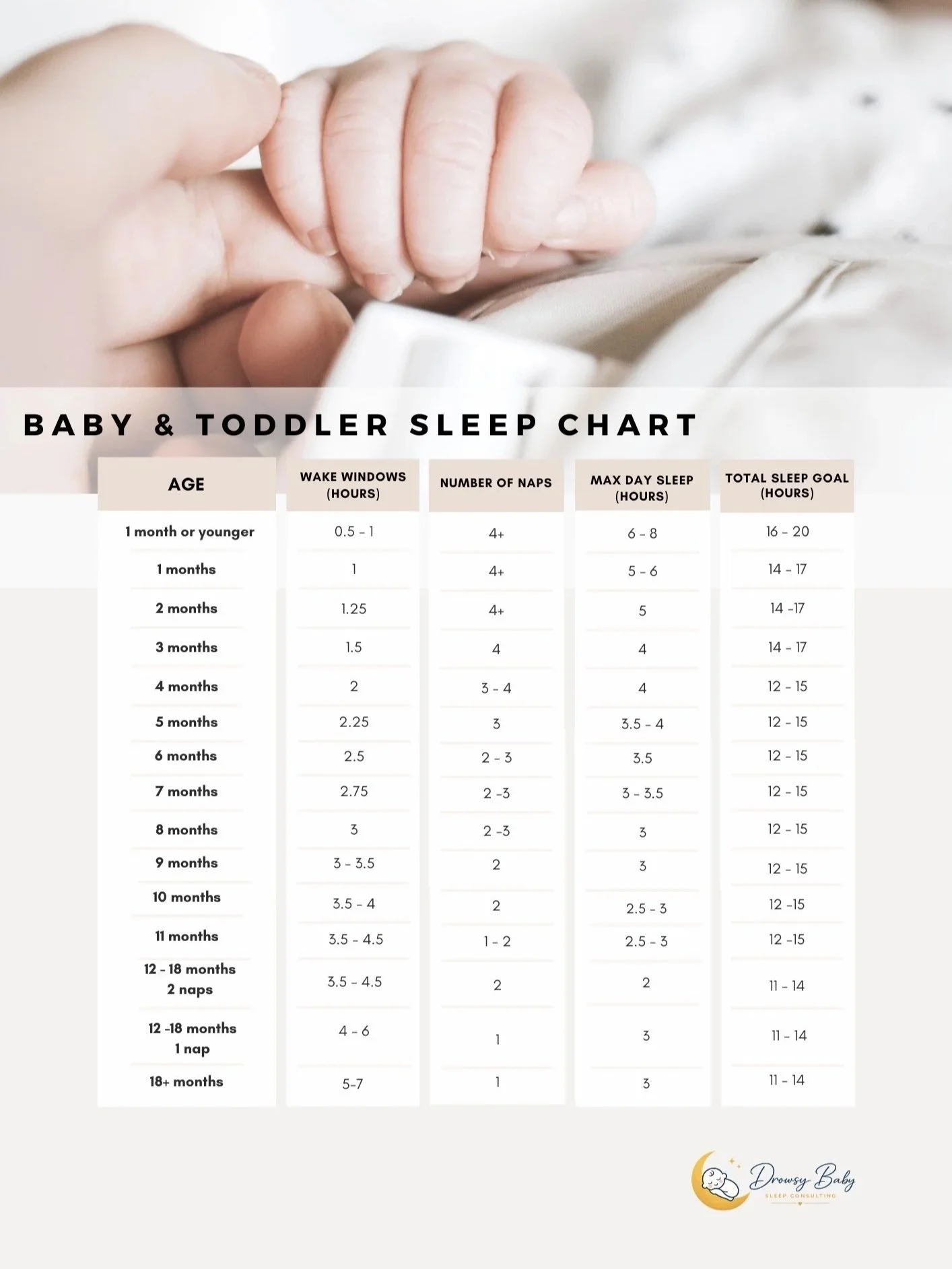
Newborn Wake Windows (0–12 Weeks)
Newborns can only tolerate very short periods of awake time.
Typical wake windows:
0–4 weeks: 35–60 minutes
4–8 weeks: 45–75 minutes
8–12 weeks: 60–90 minutes
Many newborns show sleepy cues quickly, especially after feeding. Parents are often surprised by how little awake time newborns can actually handle.
3–4 Month Wake Windows
Around this age, babies begin becoming more alert and interactive.
Typical wake windows:
1.25–2 hours
This is also when many families experience the 4-month sleep regression. Sleep patterns mature neurologically, and babies become more sensitive to overtiredness.
5–6 Month Wake Windows
At this stage, babies often transition toward more predictable naps.
Typical wake windows:
2–3 hours
Many babies can now stay awake longer before bedtime than earlier in the day.
7–9 Month Wake Windows
This age often brings major developmental milestones like crawling and pulling to stand.
Typical wake windows:
2.5–3.5 hours
Sleep disruptions during this stage are common because babies are practicing new skills.
10–12 Month Wake Windows
Older babies gradually move toward a two-nap schedule with longer periods of awake time.
Typical wake windows:
3–4.5 hours
Some babies may begin resisting one nap during this stage, but most are not truly ready to transition to one nap until closer to 15–18 months.
Toddler Wake Windows (12–24 Months)
Toddlers typically tolerate much longer awake periods.
Typical wake windows:
4–6 hours
Many toddlers transition to one nap during this stage, which can temporarily create overtiredness while schedules adjust.
Signs Your Baby’s Wake Window Is Too Long
Sometimes parents miss overtiredness because the signs can look unexpected.
Common signs include:
Rubbing eyes
Red eyebrows
Fussiness
Clinginess
Hyperactivity
Difficulty settling
Short naps
Increased night wakings
One of the biggest misconceptions about baby sleep is that keeping babies awake longer helps them sleep better. In reality, overtired babies often struggle the most.
Signs Your Baby’s Wake Window Is Too Short
A wake window that’s too short can also create sleep challenges.
You may notice:
Long time falling asleep
Babbling or playing in the crib
Short naps with happy wake-ups
Bedtime resistance
If naps suddenly shorten but your baby wakes happy, they may simply need more awake time.
How to Adjust Wake Windows Successfully
Small adjustments usually work best.
Instead of suddenly stretching awake time by 45 minutes, try increasing wake windows gradually in 10–15 minute increments every few days.
Watch your baby’s overall mood and sleep quality:
Are naps improving?
Is bedtime easier?
Are night wakings decreasing?
Those clues matter more than following an exact schedule perfectly.
It’s also important to remember that wake windows are guides, not rigid rules. Teething, developmental milestones, illness, travel, and growth spurts can all temporarily affect sleep needs.
Common Wake Window Mistakes Parents Make
One common mistake is relying only on sleepy cues after the newborn stage. As babies grow older, sleepy cues become less reliable. Many babies stop showing obvious tired signs and instead become energetic or fussy when overtired. Another mistake is expecting every wake window to be identical throughout the day.
Most babies tolerate:
Shorter wake windows in the morning
Longer wake windows before bedtime
Parents also sometimes change schedules too quickly. Sleep adjustments often take several days before improvements become noticeable.
Sample Daily Schedules by Age
Example 4-Month Schedule
7:00 AM wake
8:30 AM nap
11:15 AM nap
2:00 PM nap
4:30 PM catnap
7:00 PM bedtime
Example 8-Month Schedule
7:00 AM wake
9:30 AM nap
2:00 PM nap
7:00 PM bedtime
Example Toddler Schedule
7:00 AM wake
12:30 PM nap
7:30 PM bedtime
Schedules will vary depending on temperament, sleep needs, and nap lengths.
When Wake Windows Suddenly Stop Working
If your baby’s schedule suddenly falls apart, it doesn’t necessarily mean you’re doing something wrong. Wake windows often need adjustment during:
Nap transitions
Developmental leaps
Sleep regressions
Illness
Growth spurts
Sometimes a baby who was previously thriving on a 2-hour wake window suddenly needs 2.5 hours. These shifts are normal and expected.
Flexibility matters just as much as consistency.
Final Thoughts on Wake Windows by Age
Understanding wake windows by age can make a huge difference in your child’s sleep and your confidence as a parent.
If your baby is struggling with naps, bedtime, or overnight sleep, adjusting awake time is often one of the simplest and most effective places to start.
Remember that sleep is not about achieving a “perfect” schedule. It’s about learning your child’s patterns, responding to their changing needs, and creating rhythms that support healthy rest for the whole family.
FAQ
-
Wake windows are the periods of time a baby can stay awake comfortably between sleep periods before becoming overtired.
-
Yes. Appropriate wake windows help babies fall asleep more easily, take longer naps, and reduce overtiredness or undertiredness that can disrupt nighttime sleep.
-
Common signs include fussiness, short naps, bedtime resistance, frequent night wakings, and difficulty settling to sleep.
-
No. Most babies tolerate shorter wake windows earlier in the day and longer wake windows before bedtime.
-
Babies may resist naps, take short naps, or spend time happily awake in the crib because they haven’t built enough sleep pressure.
-
Bathory, E., & Tomopoulos, S. (2017). Sleep Regulation, Physiology and Development, Sleep Duration and Patterns, and Sleep Hygiene in Infants, Toddlers, and Preschool-Age Children.
Sleep Foundation : Babies and Sleep
Disclaimer
The information provided in this article is for general informational purposes only and does not constitute medical advice, diagnosis, or treatment. Always seek the advice of your physician or other qualified health provider regarding any medical condition. Drowsy Baby Sleep Consulting, LLC is not responsible for any consequences arising from the use of this content.