
Sleep Pressure in Babies: What It Is and Why It Matters for Better Sleep
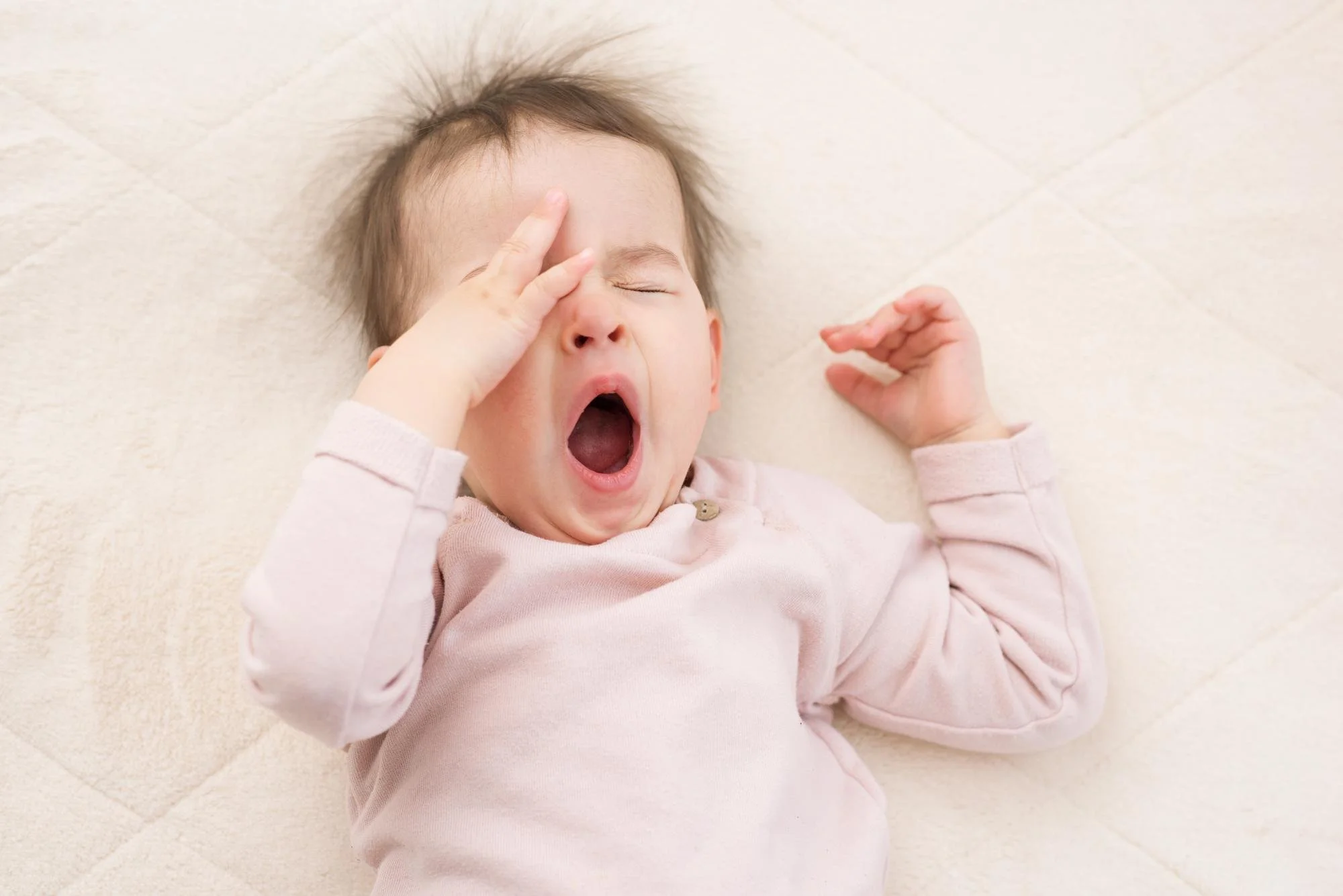
If your baby suddenly starts resisting naps, taking forever to fall asleep, or waking frequently at night, you may immediately assume something is wrong with their sleep schedule. But often, the real issue is something many parents have never heard of before: sleep pressure.
Understanding how sleep pressure works can completely change the way you approach naps, bedtime, and night wakings. In fact, many baby sleep struggles happen because a baby is either undertired or overtired — both of which directly affect sleep pressure.
In this guide, we’ll break down what sleep pressure is, how it affects your baby’s sleep, and how you can use it to create more restful naps and nights.
What Is Sleep Pressure in Babies?
Sleep pressure is the body’s natural drive to sleep that builds while your baby is awake. The longer your baby stays awake, the more sleep pressure increases. Think of it like a balloon slowly filling with air throughout the day. When enough pressure builds, your baby becomes tired and ready for sleep. Sleep releases that pressure, and the cycle starts over again. For babies, this process happens much faster than it does for adults because their nervous systems are still developing. That’s why babies can only tolerate short periods of awake time before becoming tired again.
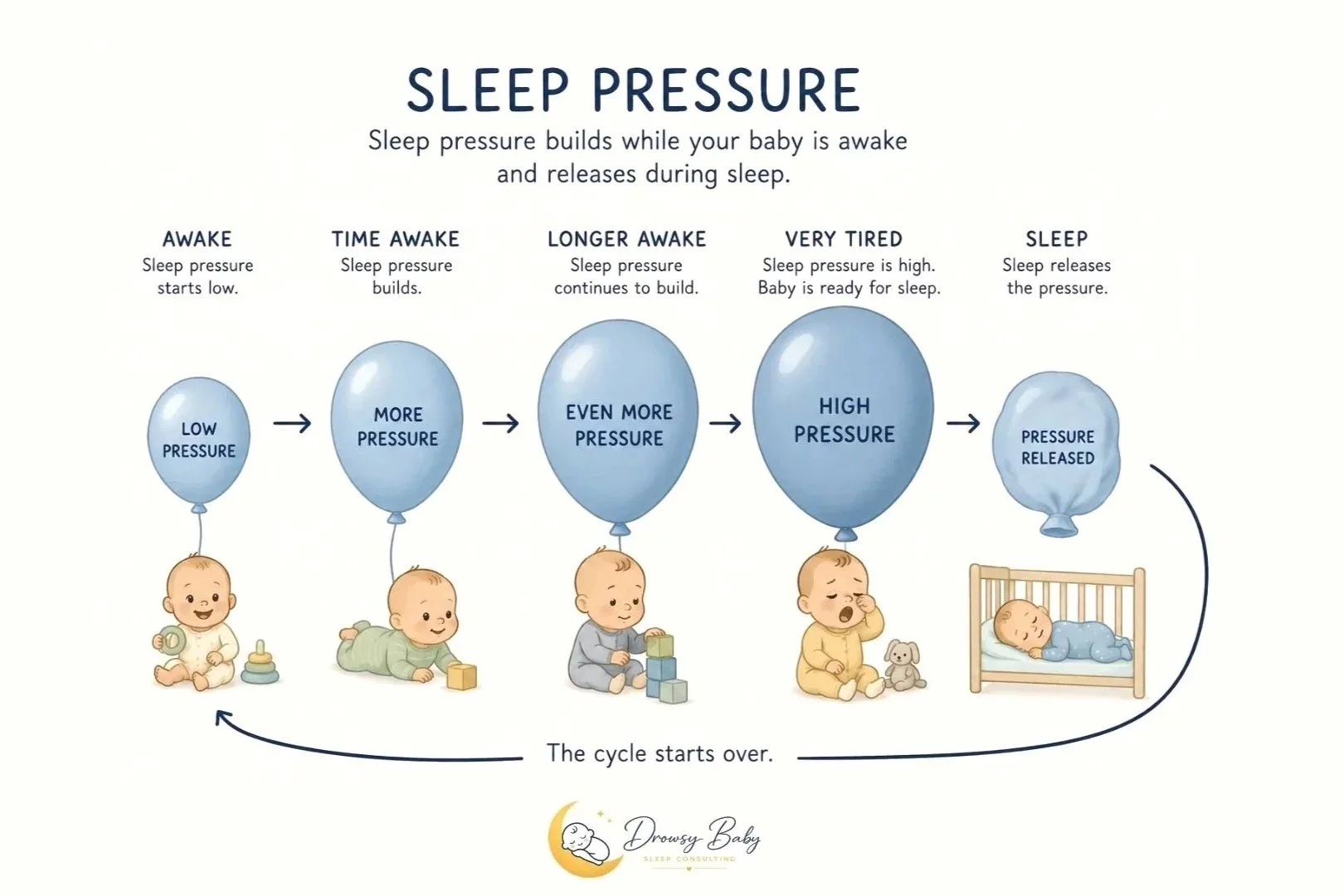
Sleep pressure is one of the biggest factors influencing:
Nap quality
Bedtime struggles
Night wakings
Early morning waking
False starts at bedtime
When parents understand sleep pressure, baby sleep often begins to make much more sense.
Why Sleep Pressure Matters for Baby Sleep
Many parents focus only on schedules or bedtime routines, but sleep pressure is what helps your baby actually fall asleep and stay asleep.
A baby who doesn’t have enough sleep pressure may:
Fight naps
Play in the crib instead of sleeping
Wake shortly after bedtime
Take short naps
Wake early in the morning
On the other hand, a baby who has too much sleep pressure may become overtired, which can actually make sleep harder.
An overtired baby may:
Cry intensely before sleep
Wake frequently overnight
Take short, restless naps
Struggle to settle
Wake after 30–45 minutes
This is where many parents get confused. It seems logical that a very tired baby would sleep better. However, babies who stay awake too long often produce stress hormones like cortisol and adrenaline, making it harder for them to relax into sleep.
Signs Your Baby Has Low Sleep Pressure
Low sleep pressure usually means your baby simply isn’t tired enough yet. This commonly happens when:
Wake windows are too short
Naps are too long
Bedtime is too early
Your baby had an unusually restful day
Signs of low sleep pressure include:
Taking a long time to fall asleep
Happy chatting in the crib
Rolling around instead of settling
Short naps after an easy bedtime
Split nights (awake for long periods overnight)
For example, imagine a 7-month-old who took a long late-afternoon nap and is then put to bed only two hours later. Even though it’s “bedtime,” their body may not have built enough sleep pressure to support consolidated sleep yet.
Signs Your Baby Is Overtired
Overtiredness happens when sleep pressure builds too high. One of the biggest misconceptions about baby sleep is assuming that “more tired” always means “better sleep.” In reality, there’s a sweet spot. A baby with healthy sleep pressure is calm, sleepy, and ready for sleep. An overtired baby may actually look alert, hyper, or restless because stress hormones are keeping them stimulated. This is why some babies:
suddenly get a “second wind” at night
become playful right before bedtime
wake frequently despite seeming exhausted
An overtired baby can seem almost frantic at bedtime. You may notice:
Arching backward
Fighting rocking or feeding
Crying intensely
Frequent night waking
Early morning wake-ups
Overtiredness creates a stress response in the body. Instead of peacefully drifting to sleep, your baby’s nervous system becomes overstimulated. This is why timing matters so much.
How Wake Windows Affect Sleep Pressure
Wake windowsare the periods your baby stays awake between sleeps. They directly influence sleep pressure.
If wake windows are:
Too short → not enough sleep pressure
Too long → overtiredness
Finding the “sweet spot” helps your baby fall asleep more easily and sleep longer. While every baby is different, average wake windows often look like this:
Newborns (0–3 Months) : 45–90 minutes
4–6 Months : 1.5–2.5 hours
6–9 Months : 2–3.5 hours
9–15 Months : 3–5 hours
These are general guidelines, not strict rules. Some babies naturally need more awake time to build enough sleep pressure, while others become overtired quickly.
Sleep Pressure and Short Naps
Short naps are one of the most frustrating baby sleep struggles. Sometimes short naps happen because a baby is overtired. Other times, the opposite is true: they simply weren’t tired enough to connect sleep cycles.
If your baby consistently wakes after 30–45 minutes smiling and happy, low sleep pressure could be the reason. However, if they wake crying and upset, overtiredness may be contributing instead. This is why observing your baby’s mood after waking can provide important clues.
Why Bedtime Battles Happen
Parents often assume bedtime resistance means their child “isn’t a good sleeper.” In reality, bedtime battles frequently come down to timing and sleep pressure.
A baby who:
Screams at bedtime,
Pops awake repeatedly,
Or treats bedtime like playtime
may have a schedule mismatch rather than a behavioral problem. Sometimes shifting bedtime by just 15–30 minutes can make a dramatic difference. This is especially common during developmental transitions when wake windows naturally increase.
Can Sleep Pressure Change as Babies Grow?
Absolutely. As babies get older:
Wake windows lengthen
Nap needs decrease
Sleep pressure builds more slowly
This is why schedules that worked beautifully at 4 months may suddenly stop working at 7 or 10 months. Parents often think sleep has “regressed,” when in reality, their baby simply needs more awake time to build appropriate sleep pressure. Developmental milestones, teething, illness, and travel can also temporarily affect sleep pressure and sleep quality.
How to Improve Sleep Pressure Naturally
The good news is that healthy sleep pressure can usually be supported with simple adjustments.
1. Follow Age-Appropriate Wake Windows A wake window is the amount of time your little one stays awake between naps and bedtime. If wake windows are too long, your baby can become overtired. If they’re too short, there may not be enough sleep pressure to fall asleep and stay asleep. Following age-appropriate wake windows helps support better naps and nights.
2. Prioritize Consistent Wake Times A regular morning wake-up time helps regulate your baby’s internal body clock and supports more predictable naps and bedtimes. Sleeping in too late or waking at different times each day can throw off sleep pressure and make naps or bedtime more challenging.
3. Get Natural Light Exposure Natural light plays an important role in regulating your baby’s circadian rhythm, which helps the body recognize when it’s time to be awake and when it’s time to sleep. Spending time outside or near natural sunlight during the day can help improve overall sleep quality and support more restful nights.
4. Encourage Active Awake Time Active wake windows help babies build healthy sleep pressure throughout the day. Tummy time, floor play, crawling, walking, and engaging activities provide both physical and mental stimulation, helping your little one feel appropriately tired when it’s time to sleep.
5. Watch Your Baby, Not Just the Clock Wake windows are helpful guidelines, but every baby is different. Some babies may need slightly more or less awake time depending on their age, temperament, and sleep needs. Watching for signs of overtiredness, undertiredness, and overall mood can help you adjust your schedule for better sleep success.
When Sleep Pressure Isn’t the Whole Problem
While sleep pressure plays a major role in sleep quality, it’s not always the only factor affecting your baby’s sleep. Other contributors may include:
hunger or feeding issues
sleep regressions
teething discomfort
nap transitions
developmental milestones
strong sleep associations
illness or discomfort
If sleep suddenly changes despite an age-appropriate schedule, it’s important to look at the full picture.
Final Thoughts on Sleep Pressure in Babies
If naps feel unpredictable or bedtime has become stressful, sleep pressure may be the missing piece. Understanding how your baby builds sleep pressure throughout the day can help you make better decisions about wake windows, nap timing, and bedtime routines. Often, small adjustments create surprisingly big improvements.
Most importantly, remember that baby sleep is not about perfection. Sleep needs change rapidly during infancy, and flexibility is normal. Learning how sleep pressure works simply gives you a more confident way to respond to those changes. If you’ve been struggling with short naps, bedtime resistance, or frequent night wakings, understanding sleep pressure in babies can be a powerful first step toward more restful sleep for the whole family.
FAQ
-
Sleep pressure is the body’s natural drive to sleep that builds while a baby is awake. The longer your baby stays awake, the stronger the urge to sleep becomes.
-
Yes. When babies stay awake too long, their bodies can release stress hormones that make it harder to settle and stay asleep.
-
An undertired baby may resist sleep, play in the crib, take short naps, or wake frequently despite seeming happy and energetic.
-
Yes. Both low sleep pressure and overtiredness can contribute to frequent night wakings and disrupted sleep.
-
Following age-appropriate wake windows, encouraging active play, getting natural daylight, and maintaining consistent routines can all support healthy sleep pressure.
-
The National Institute for Occupational Safety and Health (NIOSH) - Sleep Pressure: Homeostatic Sleep Drive
Bucko, A. G., Dowda, M., Frongillo, E. A., Torres, M. E., & Pate, R. R. (2021). Nighttime sleep and physical activity in 6-7 month-old infants.
Burns, A. C., Saxena, R., Vetter, C., Phillips, A. J. K., Lane, J. M., & Cain, S. W. (2021). Time spent in outdoor light is associated with mood, sleep, and circadian rhythm-related outcomes
Disclaimer
The information provided in this article is for general informational purposes only and does not constitute medical advice, diagnosis, or treatment. Always seek the advice of your physician or other qualified health provider regarding any medical condition. Drowsy Baby Sleep Consulting, LLC is not responsible for any consequences arising from the use of this content.